

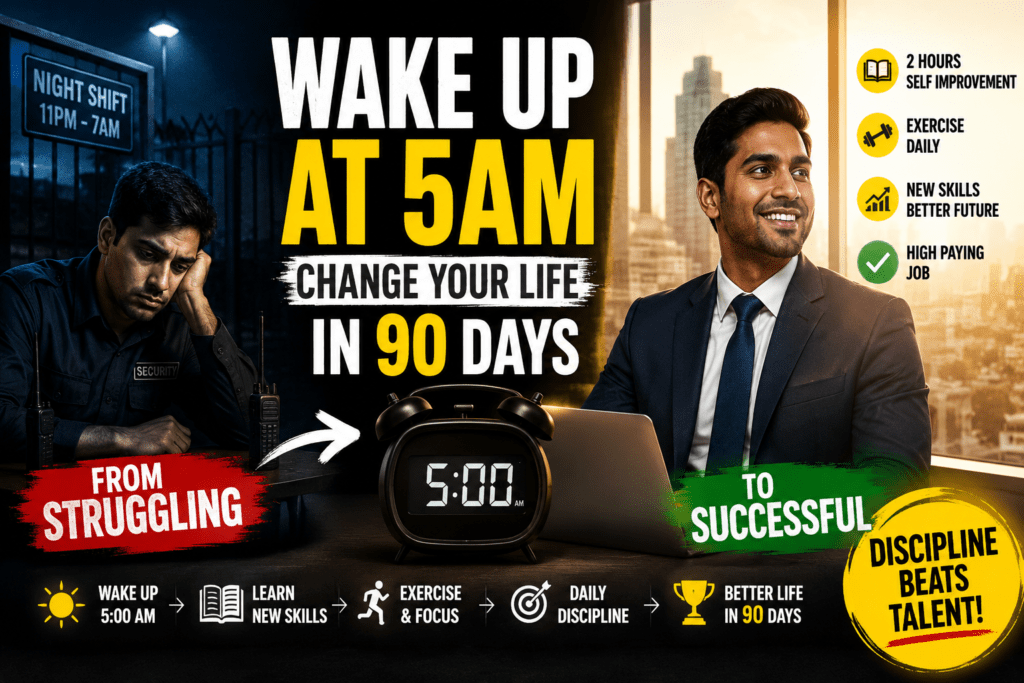
Success Doesn’t Arrive. It’s Built.
Most people believe success comes from luck, connections, or waiting for the right opportunity.
Thomas believed that too.
At 38 years old, he worked as a night security guard. Every evening, he reported to work, spent long hours monitoring a building, and returned home exhausted. His paycheck covered basic expenses, but there was never enough left over to improve his family’s future.
Life felt like an endless cycle.
Work. Sleep. Repeat.
And no matter how hard he worked, nothing seemed to change.
Then one conversation changed everything.
The Moment That Sparked Change
One night, Thomas noticed a successful businessman named Mr. Chun regularly arriving at the office before sunrise.
Curious, he asked him a simple question:
“How do you always seem to be ahead of everyone else?”
Mr. Chun smiled and replied:
“I don’t have more time than anyone else. I simply use the hours most people waste.”
Those words stayed with Thomas.
For the first time, he realized that success wasn’t necessarily about working harder—it was about using time differently.
The Power of Time Arbitrage
The next morning, Thomas decided to wake up at 5:00 AM.
Not because he enjoyed mornings.
Not because he felt motivated.
But because he wanted a chance to change his future.
By waking up two hours earlier than usual, he created a quiet window before the world demanded anything from him.
Two hours every day.
That may not sound like much.
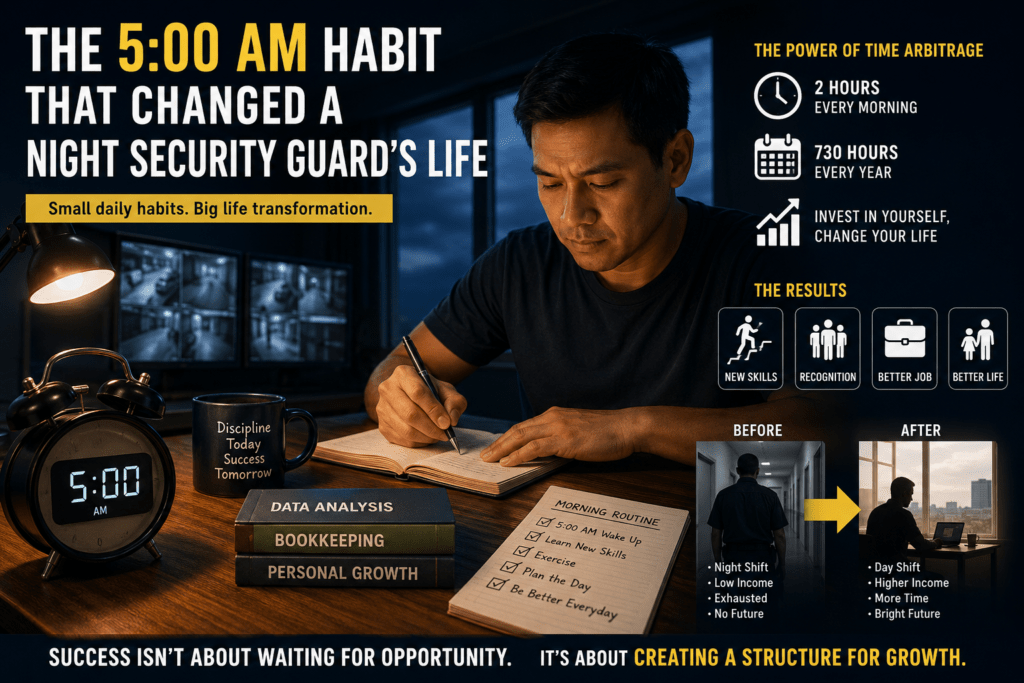
But over one year, those two hours added up to:
730 hours of focused self-development.
More than 30 full days.
More than enough time to learn new skills, improve health, and build a better future.
Thomas had discovered what many successful people understand:
Small daily investments create extraordinary long-term results.
Building a Strategic Morning Routine
Thomas didn’t waste those early hours scrolling through social media or watching television.
He created a simple structure.
Hour 1: Skill Development
Every morning, he spent one hour learning valuable professional skills.
He studied:
- Data analysis
- Basic bookkeeping
- Spreadsheet management
- Financial organization
He wasn’t looking for shortcuts.
He focused on steady improvement.
One lesson at a time.
One skill at a time.
Hour 2: Physical Health and Planning
The second hour was dedicated to his body and mindset.
He would:
- Exercise
- Stretch
- Walk
- Review daily goals
- Plan priorities
This combination helped him build energy, confidence, and discipline.
Each morning became an investment in both his career and his health.
The Difficult First Three Weeks
The beginning was far from easy.
Every morning felt like a battle.
His body resisted.
His mind complained.
The alarm clock became his enemy.
For nearly three weeks, Thomas struggled to maintain the routine.
Many people quit during this stage.
But Thomas made a decision.
He would continue regardless of how he felt.
Slowly, something changed.
His internal clock adapted.
The early mornings stopped feeling painful.
The habit became automatic.
What once felt like sacrifice became normal.
The routine was no longer something he forced himself to do.
It became part of who he was.
The Breakthrough After 90 Days
Three months later, Thomas began noticing opportunities he had never seen before.
At work, he recognized inefficiencies in record keeping and scheduling.
Using the skills he had learned during his morning study sessions, he organized information more effectively and proposed improvements.
His managers noticed.
Soon, Thomas was given greater responsibility.
Not because he asked for it.
Because he had earned it.
Eventually, he was promoted from night security duties to a day-shift bookkeeping position.
The promotion brought:
- Better working hours
- Increased income
- Greater job stability
- More time with family
For the first time in years, Thomas felt in control of his future.
The Most Important Lesson
Many people think Thomas succeeded because he woke up at 5:00 AM.
That’s not entirely true.
The alarm clock wasn’t the secret.
The secret was what happened during those hours.
The real transformation came from:
- Consistent learning
- Daily self-investment
- Long-term thinking
- Discipline over motivation
The early mornings simply created the space for growth.
Success Is a Structure
Thomas eventually reached his original goal.
He achieved a better career.
He improved his finances.
He created stability for his family.
But he never stopped waking up at 5:00 AM.
Why?
Because he no longer saw it as a temporary strategy.
It had become part of his character.
A foundation for continuous growth.
A reminder that every day offers a choice:
Spend time reacting to life…
Or spend time designing the future you want.
Final Thoughts
Success rarely arrives in dramatic moments.
More often, it is built quietly through small actions repeated consistently over time.
Thomas didn’t wait for opportunity.
He created it.
By reclaiming two hours every morning, he transformed not only his schedule but the direction of his entire life.
The question isn’t whether you can wake up at 5:00 AM.
The real question is:
What could your life look like one year from now if you invested two focused hours in yourself every single day?
About The Author